Sanctifying the waters
Based on Luke 3:15-17, 21-22
I
managed to fit in two tramping trips over Christmas. One was a 22 km trek
with a friend through Belmont Regional Park, which took us all day. The
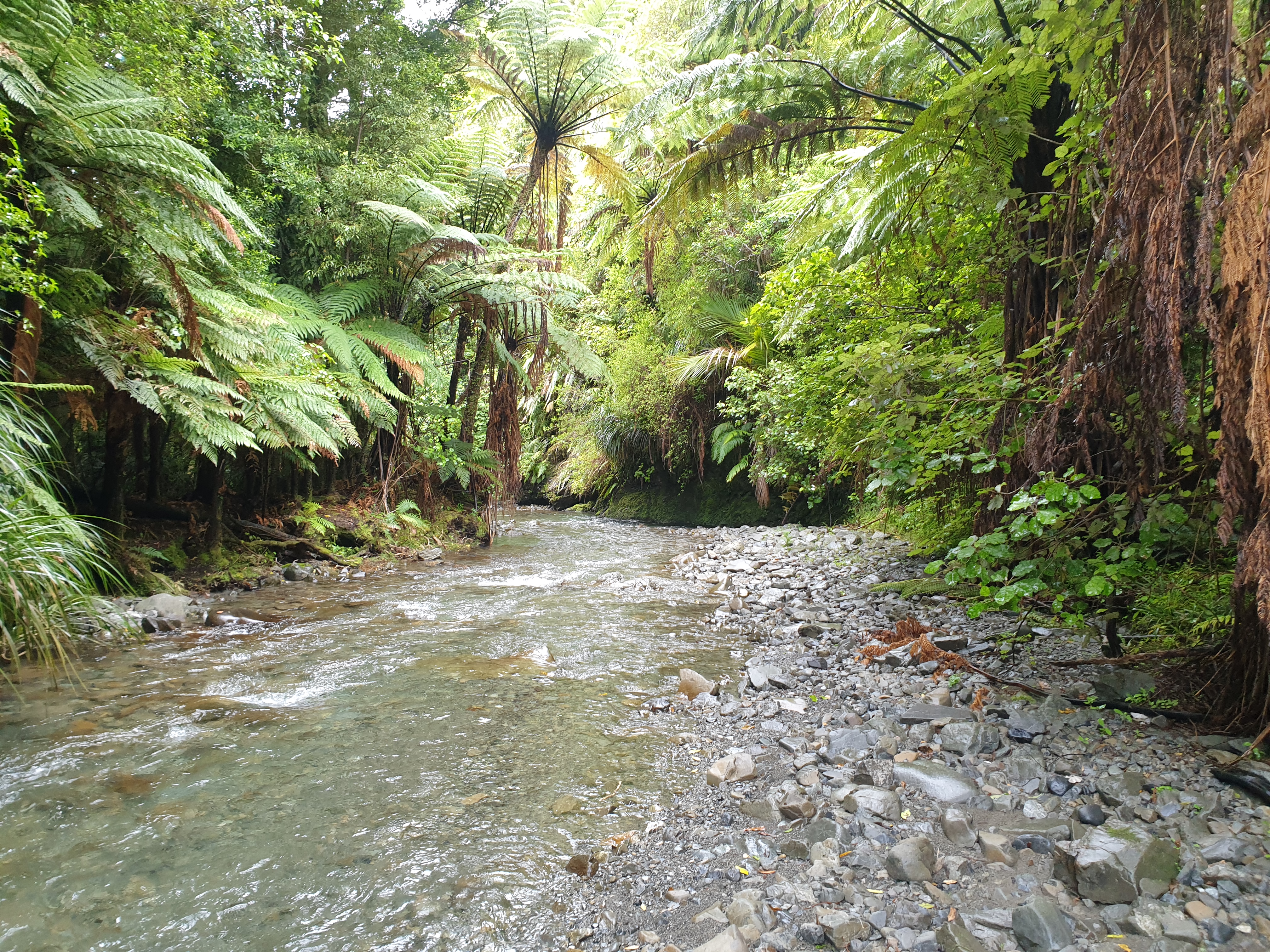
other was a mostly off-track solo expedition partway up the Ngatiawa River.
I
followed the first part of the Kapakapanui Track, then left the track and
continued up the river itself. Each turn of the river brought new sights
into view, as I ventured deeper and deeper into unfamiliar territory.
My
adventures do not often take me to steep and exposed peaks and ridgelines,
so rivers are the most dangerous places I commonly find myself in on trips
to the wilderness.
There is something mysterious, almost frightening, about rivers. There can
be surprises lurking in them, not always pleasant. I am mindful of how
drowning is the second biggest reason after falls for people dying in the
wilderness here, and our leading overall cause of recreational death.
Especially given I came very close to drowning when I was young, and one of
my best friends, a very experienced sailor, did succumb to the water some
years later.
I
could not help but think about rivers while reflecting on today’s theme.
Today is a very significant day in the Church calendar. Today is the day we
observe the baptism of Jesus. This is so significant our Lectionary states,
“This is a principal feast and should not be displaced by any other
celebration.”
Which is not surprising, given Jesus’ baptism can be seen to be one of the
five major milestones in his life, along with his transfiguration,
crucifixion, resurrection, and ascension.
We
have just heard the Gospel according to St Luke’s account of the baptism of
Jesus. This event is recorded in all four canonical gospels, with some
variations in the detail between the different versions, which we need not
trouble ourselves with today.
We
should all know what baptism is.
But
where does it come from?
It grew out of the Tvilah, a ritual
purification ceremony undertaken by converts to Judaism. But by the time it
evolved into the baptism of St John the Baptiser, it was very different. He
offered a baptism of repentance for people who mostly were already Jews and
who wanted to turn from their sins.
Now
the Church teaches us Jesus has no sin. So why does he need to subject to
himself to a Jewish purification rite?
Greek Orthodox priest Father Barnabas Powell answers this well:
Jesus did not need baptism. The water
needed Jesus! By his baptism, Jesus restores water to its original intent,
to truly clean, to truly refresh, and to truly satisfy our thirst.1
So,
Jesus does not need to be cleansed by the waters of baptism, for he has no
sins to be washed away. However, he sanctifies the waters of baptism by his
descent into them. In doing so, he gives life to the water so it may give
life to us. And enables us to follow him on a journey into the unknown.
Jesus sanctifying the water makes it possible for the water to sanctify us.
This
makes perfect sense when we consider baptism is of course one of the two
sacraments the Anglican Church recognises being commanded by Jesus, along
with the Eucharist
So,
what exactly is a sacrament? Perhaps the most frequently cited definition is
one St Augustine of Hippo gave us: an outward sign of an inward grace.
But
I like to take that a bit further. I see a sacrament as something that is
both divine and material in nature, something that brings the spiritual and
the physical together. A place where heaven and earth come together. Where
the divine and the material meet.
A
sacrament is a portal between the divine and the material that brings them
together.
Heaven and Earth meet when Jesus is born, both fully divine and fully human.
In those wonderful words from the Gospel According to St John:
And the Word became flesh and lived
among us.2
They
meet when Jesus is baptised. In the words of today’s reading from the Gospel
according to St Luke:
21Now
when all the people were baptized, and when Jesus also had been baptized and
was praying, the heaven was opened, 22and the Holy Spirit
descended upon him in bodily form like a dove. And a voice came from heaven,
‘You are my Son, the Beloved; with you I am well pleased.3
They
meet at other significant moments of his life.
They
also meet when we are baptised and become members of the Church.
And
they meet when we encounter the risen Christ in the Eucharist.
But
for Jesus to institute the sacraments, he must participate in them first so
we might follow. He submits to the baptism of St John the Baptiser, to
sanctify the water and transform it into the sacrament of baptism. Just like
he will later have his last meal before his execution and sanctify it and
turn it into the sacrament of the Eucharist.
Earlier I spoke of the dangers of rivers. It is fitting Jesus is baptised in
a river and not some serene body of water. This is a major milestone in his
life. It is when Jesus the humble carpenter’s son becomes Jesus the teacher,
whose radical teachings put him at odds with the religious and political
authorities of the day.
Being a follower of Jesus can also be dangerous. The road may be long, and
the journey may be challenging. And there will be many rivers to cross. But
we will get there.
Whatever trials and tribulations we may face, we are set free by his life,
death, and resurrection of Jesus the Christ. So let us follow him into those
dangerous waters, safe in the knowledge he has gone before us and is there
to guide us.
Darryl Ward
12 January 2025
1 http://myocn.net/jesus-baptized/ (retrieved 11 January 2020)
2 John 1:14a
All Bible references are from the New Revised Standard Version unless stated otherwise.